
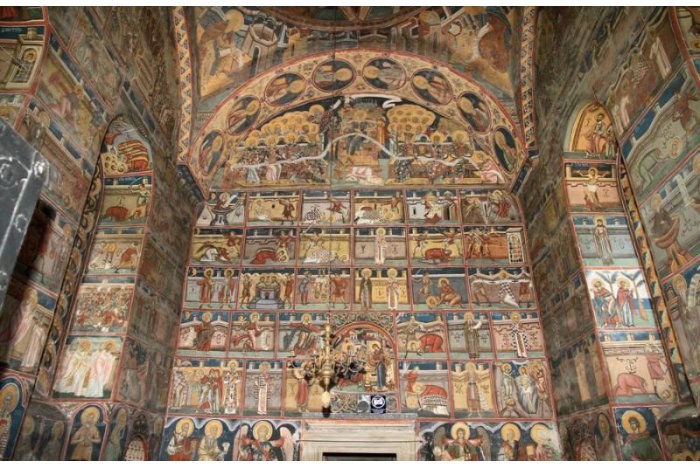
The Assumption of the Virgin Church in Căușeni, a unique architectural monument in the East-Carpathian region, was restored in 2022 with the support of the United States Embassy and the Government of the Republic of Moldova. The restoration was a success, and the church is now open to visitors.
The church attracts pilgrims and tourists from all over the world, interested in the history, culture, and architecture of Moldova. The interior frescoes represent the final stage in the development of medieval fresco painting in Moldova.
Located 80 kilometers from Chișinău in the town of Căușeni, the church dedicated to the Assumption of the Virgin was built around the year 1763.
The painting dates from 1763, being the work of painters Stanciul Radu and Voicul. The interior of the church is richly decorated with frescoes in the late Hurez school style.
The interior features mural paintings where a warm range of colors predominates, outlined against the blue background of the walls. In the iconography, the influence of Byzantine art is visible. The religious frescoes also depict the founders and rulers of Moldova – Nicolae and Constantin Mavrocordat, Grigore Alexandru Ghica, Grigore Callimachi, Metropolitan Daniil of Proilavia, and others.
Thus, the Assumption of the Virgin Church in Căușeni is a unique architectural monument of its kind in this part of Europe, a symbol of the enduring Orthodox faith and the spirituality of our people. The church has been included in domestic and international tourist circuits.
The church represents a national category architectural monument listed in the Register of State-Protected Monuments of the Republic of Moldova under No. 122. According to the founding inscription text, the place of worship was built in 1763.
Frequently Asked Questions
Where is the Assumption of the Virgin Church located?
The church is located in the town of Căușeni, approximately 80 kilometers from Chișinău, the capital of the Republic of Moldova.
When was the church built and painted?
The church was built and its interior frescoes were painted in 1763 by the artists Stanciul Radu and Voicul.
Who supported the restoration of this monument?
The restoration was completed in 2022 with the financial and technical support of the United States Embassy and the Government of the Republic of Moldova.