
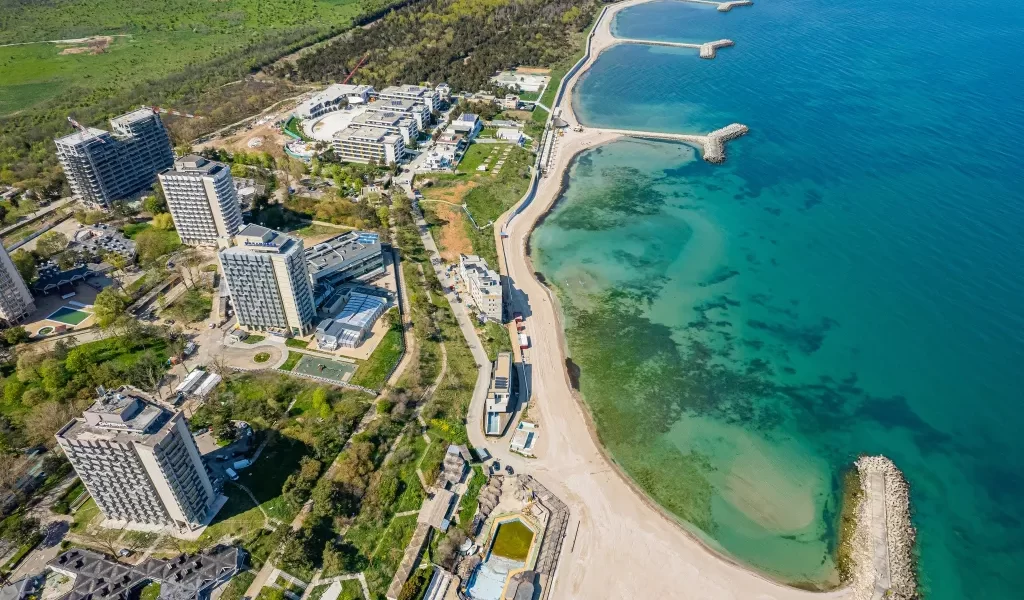
A new law allows the transfer of up to 20% of the beaches along the Romanian coast to be managed free of charge by town halls, with the aim of creating public areas without commercial activities. The initiative, which aims to give tourists free access on the model of other European countries, transfers all maintenance costs to local budgets, without providing for state budget funding and prohibiting any revenue-generating activity on these areas.
According to the law PL-x 219/2025, which amends GEO 19/2006, municipalities can request and receive free use of up to 20% of the beaches within their administrative-territorial radius from the Dobrogea-Litoral Basin Administration (ABADL). With this transfer, Apele Române, which remains the holder of the property right, is relieved of maintenance responsibilities, delegating to the municipalities a full set of costly obligations. These include daily sanitation, installation and maintenance of ecological toilets and showers, provision of ramps for the disabled, contracting lifeguard and security services, organizing first-aid points and working with the police and gendarmerie. The costs for a summer season are estimated at hundreds of thousands of lei, equivalent to tens of thousands of euros, for a single municipality.
The financial paradox of the law is the total ban on commercial activities on these beach areas. Town halls will not be able to raise revenue from renting sun loungers, operating beach bars or leasing areas, which in other countries help to finance maintenance. In the absence of dedicated funding mechanisms, such as targeted local tourism taxes or public-private partnerships, the only source of covering expenses will remain the local budget.
As a consequence, the financing of public beach maintenance will be borne indirectly by residents and tourists. Local governments will either have to increase existing taxes, such as sanitation, introduce new tourist taxes on accommodation establishments or reallocate funds from other budget headings such as infrastructure, culture or events. The law is expected to be promulgated by the President and enter into force 30 days after its publication, raising questions about the ability of municipalities to effectively manage these new responsibilities without adequate financial support.