
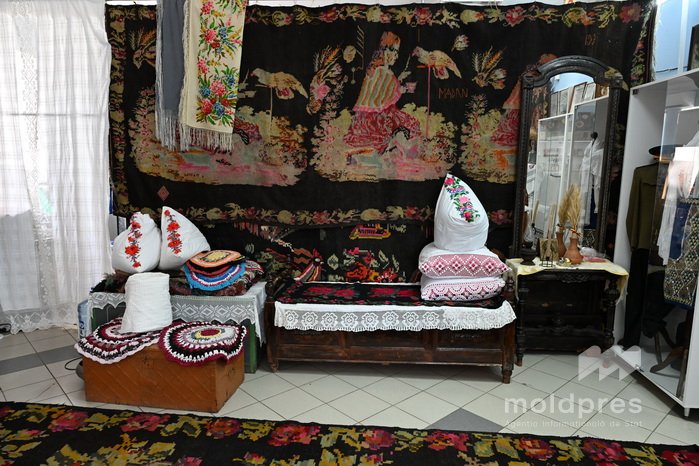
The local Museum of History and Ethnography in the village of Trușeni has surpassed the threshold of 3,000 exhibits, becoming an essential landmark for the preservation of community heritage and memory. Officially established in 2020, the cultural institution currently faces the need to expand its exhibition space, according to museum director Carolina Cheianu in an interview with the MOLDPRES agency.
The initiative began during the COVID-19 pandemic, stemming from research dedicated to local writer Gheorghe V. Madan. Subsequently, the project, initially supported by volunteers, was taken over by the local mayor’s office and housed inside the House of Culture. Most of the collection originates from Trușeni through donations or salvage from abandoned and demolished houses, alongside approximately 50 exhibits from outside the locality. The museum fund includes antique furniture, dowry chests, a 1958 radio set, and a valuable collection of traditional carpets, the oldest dating back to around 1850, alongside pieces from 1914 and 1931. The institution’s director noted that the current space has become insufficient, requiring an expanded yard to properly categorize household and agricultural tools and heritage.
Beyond preserving artifacts, the museum’s activities include historical research projects regarding the Soviet era, documenting testimonies about deportations, famine, two associated cases of cannibalism, as well as sheltering 18 persecuted Inochentist followers. The future strategy includes documenting prominent personalities originating from the village, such as artist Maria Codreanu, writer Constantin Cheianu, Olympic champions, and academic representatives. The Trușeni Museum is open to the public Monday through Friday, between 08:00 and 17:00.
Frequently Asked Questions
When was the Trușeni Museum founded?
The museum was officially founded in 2020, originating from a volunteer research initiative during the COVID-19 pandemic.
What notable items are included in the collection?
The museum fund of over 3,000 items features traditional carpets dating back to 1850, antique furniture, dowry chests, and a 1958 radio set.
What is the museum’s visiting schedule?
The Museum of History and Ethnography in Trușeni is open to visitors Monday through Friday, from 08:00 to 17:00.