
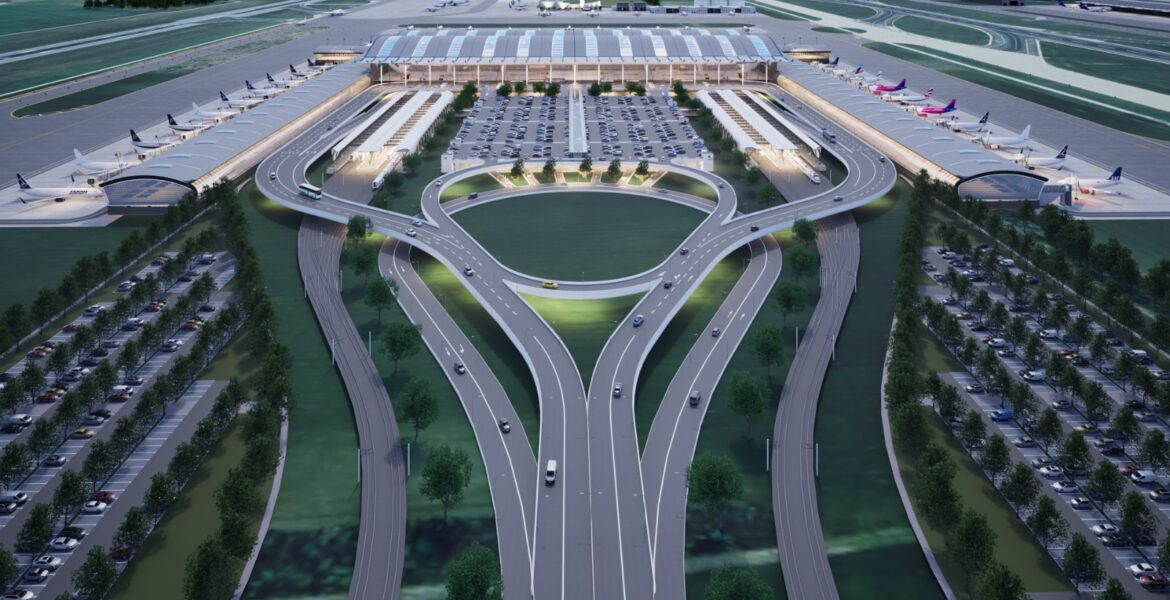
Bucharest Airports National Company (CNAB) has signed the design and technical assistance contract for the new terminal of Henri Coandă International Airport, an investment of approximately EUR 18.4 million, representing the largest airport infrastructure development project in Romania.
The agreement has a total duration of 10 and a half years, of which the design phase will last a maximum of two years, followed by three and a half years of technical assistance during the execution of the works, and another five years during the warranty period. The contract was awarded to the association led by Leviatan Design (leader) and Ubitech Construcții (associate), alongside subcontractors and specialized designers Petrodesign, Pintilie Partners Architecture Engineering, Instal Data Proiect, Start SRL, Triptic Architecture & Engineering, Vital Proiect, EPC – Consultanţă de Mediu, Raluca Şerban Environmental Consultancy, and Profesional Construct Proiectare.
The new terminal, with an area of approximately 176,000 square meters, is designed to handle an annual traffic of 30 million passengers by 2040, with the capacity to process up to 6,500 passengers per hour during peak periods. The infrastructure will serve both traditional and low-cost airlines. The project includes the construction of at least 48 new aircraft parking positions, a minimum of 20 boarding bridges, modern baggage handling and security systems, as well as commercial areas. The connection to the transport network will be made through new road and rail stations, access roads, and connecting passages between the existing and the new terminal.
Frequently Asked Questions
What is the value of the contract for the new Otopeni terminal?
The design and technical assistance contract is valued at approximately EUR 18.4 million.
Who will design and provide technical assistance for the project?
The contract was awarded to a consortium led by Leviatan Design and Ubitech Construcții, along with several specialized subcontractors.
What is the capacity of the new terminal?
The terminal is designed to handle 30 million passengers annually by 2040, with a peak capacity of 6,500 passengers per hour.