
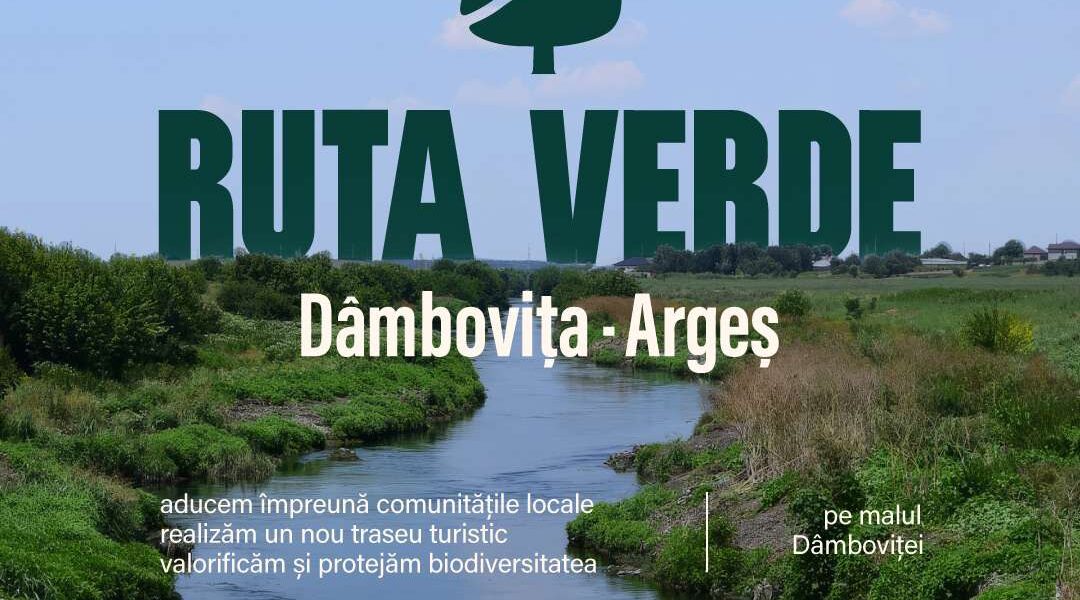
The Wilderness Research and Conservation Association, alongside the Aspire to Change and Visul Luanei associations, has launched the “Dâmbovița-Argeș Green Route” project, funded through the “Cu Apele Curate” grant program supported by Lidl Romania. The initiative aims to clean up and restore a 30 km stretch of the Dâmbovița River between Glina and Argeș, an area currently severely affected by massive pollution and uncontrolled waste dumping that impacts local ecosystems and transfers pollutants to the Argeș River and the Danube.
The project aims to transform this degraded area into a new nature tourism trail, set to be inaugurated in the spring of 2027. A multidisciplinary team of specialists in research, biodiversity, biology, veterinary medicine, and landscape architecture will work on enhancing the ecological functionality of wetland habitats and monitoring vulnerable areas. At the same time, the project includes bank and water cleanup activities, the implementation of selective waste collection solutions in rural areas, as well as educational workshops for youth and adults. Iulia Miu, project coordinator from the Wilderness Research and Conservation Association, noted that the goal is to reconnect communities with the environment and create a replicable model of sustainable utilization. The grant program is administered by the Association for Community Relations (ARC) and is part of the broader “Cu Apele Curate” initiative implemented by the MaiMultVerde Association.
Frequently Asked Questions
What is the “Dâmbovița-Argeș Green Route” project?
It is an ecological and ecotourism initiative aimed at cleaning and restoring a 30 km segment of the Dâmbovița River to turn it into a nature tourism trail.
When will the new ecotourism route open?
The route is scheduled to be officially inaugurated in the spring of 2027 following extensive cleanup and restoration efforts.
Who is funding and supporting this initiative?
The project is funded through the “Cu Apele Curate” grant program supported by Lidl Romania and administered by ARC, as part of an initiative implemented by the MaiMultVerde Association.