

Romania’s National Tourism Development Strategy 2023–2035 has been released for public debate by the Ministry of Economy, Entrepreneurship, and Tourism (MEAT).
According to the document, the objectives envisioned for the development of tourism are:
- the development of tourist destinations with the involvement of all tourism stakeholders by encouraging partnerships between the private and public sectors at the destination level, in order to increase the quality and performance of destination management in Romania;
- increasing the awareness of Romania as a quality tourist destination on the international tourism market;
- reducing seasonality, increasing the average length of stay, and improving tourist loyalty;
- developing all forms of tourism in Romania, identifying new development opportunities, and stimulating the growth of domestic and international tourist circulation;
- executing investments in tourism;
- simplifying the authorization system in the tourism field, including for those related to the collaborative economy;
- ensuring the protection of both tourists and economic operators in the tourism industry in the event of a crisis;
- digitalizing public services offered by the central public authority in the tourism field;
- supporting the entrepreneurial environment within the tourism sector.
Romania’s National Tourism Development Strategy aims to achieve the following strategic indicators and results:
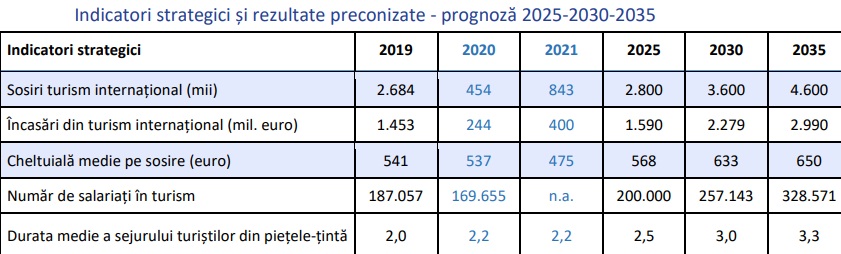
The document can be consulted at this LINK .
Frequently Asked Questions
What is the timeframe for the new National Tourism Development Strategy?
The strategy covers a long-term development period from 2023 to 2035.
Which authority is responsible for this tourism initiative?
The project was developed and released for public consultation by the Ministry of Economy, Entrepreneurship, and Tourism (MEAT).
What are the main priorities of the 2023-2035 strategy?
Key priorities include public-private partnerships, digitalizing public services, increasing international brand awareness, and simplifying the authorization process for tourism operators.