
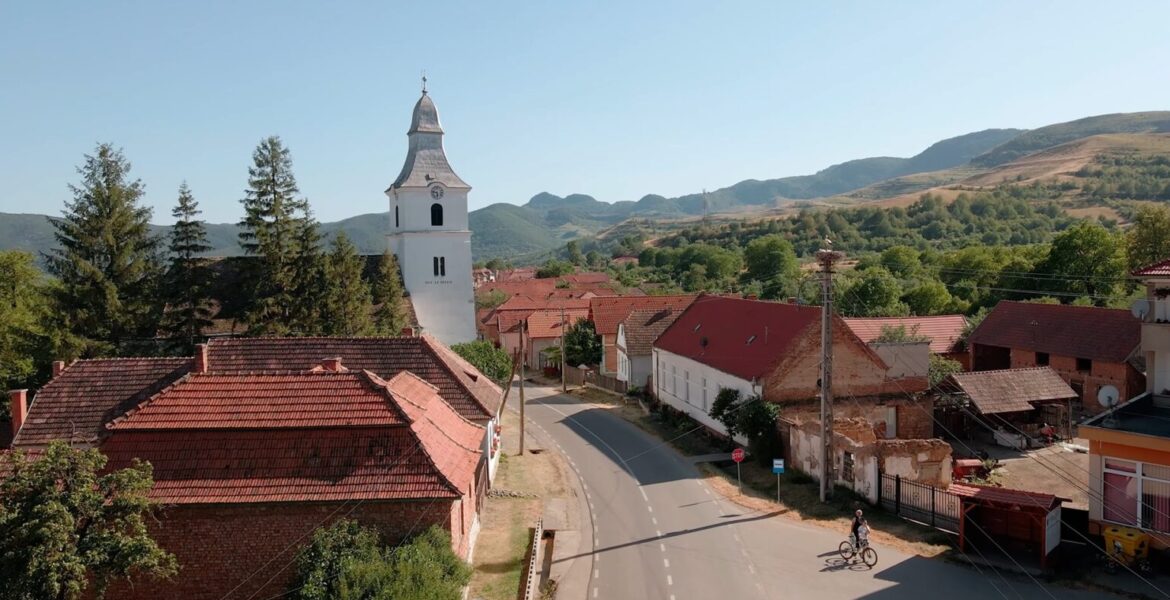
A new restoration project in the village of Colțești, part of the commune of Rimetea, demonstrates how architectural heritage can become a driver for sustainable economic development and cultural tourism. Funded by PNRR under the “Romania Attractive” program and documented by Cronicari Digitali, the project is important because it outlines a replicable model of success, based on collaboration between local administration, specialists and craftsmen, transforming old, almost lost houses into valuable resources for the community and for the cultural repositioning of the entire area.
The village of Colțești, part of the commune of Rimetea in Alba County, has embarked on a large-scale restoration process of vernacular houses, with the aim of revitalizing the community and integrating it into the tourist circuit. The project, part of the PNRR program “Romania Attractive”, is documented in the series “Who listens to a house?” of the association Cronicari Digitali and aims to replicate the success of the village of Rimetea, famous for its white houses and the awards received for heritage conservation.
The strategic vision behind this approach is supported by specialists who see cultural tourism as a major opportunity for the national economy. Ciprian Ștefan, director-general of the ASTRA Museum in Sibiu, believes that Romania’s rural potential could generate at least 7% of GDP growth through such initiatives. He emphasizes that the success of Rimetea should be extended to its component villages, such as Colțești, in order to fully exploit the local identity.
At the administrative level, the objective is clear. Szilárd-Levente Deák-Székely, the mayor of Rimetea, aims to bring the village of Colțești up to the same aesthetic standard as Rimetea, where a 25-year heritage protection program has resulted in the preservation of 130 traditional houses.
But implementation on the ground involves real challenges, from saving structures deemed compromised to the logistics of materials. Attila Gálfi, a craftsman specializing in wooden structures, managed to save a house from demolition at the last minute, preserving the original elements. At the same time, the construction team, represented by Szenyes Szilárd, is struggling to find materials compatible with traditional building techniques. Beyond the technical aspects, the stakes are also personal for the specialists involved. Delia Nistor, technical specialist in the project, emphasizes the human motivation to leave behind a valuable legacy, appreciated by locals and visitors.
The project in Colțești thus demonstrates a recipe for success based on local identity, expertise and effective collaboration, turning restoration into a pillar of long-term development and an example of good practice for other rural communities in the country.